INSIDE NEUVIOR

Medicines, biology and the work that connects them.

NEUVIOR is the pharmaceutical research and technology company founded by Varun Sharma.

Its work spans medicines intelligence, biomedical research and resource economics.

PHARMORIS and the glioblastoma programme provide two closer views of that work: one concerns medicines decisions, the other the biology of tumour recurrence.

Varun’s role

As founder, CEO and CTO, Varun sets the company’s direction and connects its programmes with the expertise, evidence and resources they need.

His product-architecture work is central to PHARMORIS. In biomedical research, his contribution centres on the research rationale, proposed study design and development of the programme.

01

Medicines Intelligence

How evidence becomes a medicines decision and a practical next step.

02

Biomedical Research

What treatment-surviving tumour cells can reveal about later regrowth.

03

Resource Economics

The materials, energy and process questions behind pharmaceutical manufacturing.

MEDICINES INTELLIGENCE · PHARMORIS

What happens after a medicines decision?

A recommendation can look clear on paper. Putting it into practice brings further questions about evidence, professional review, people and resources.

PHARMORIS is NEUVIOR’s medicines software programme, being developed to connect those parts of the work.

The aim is to make the route from a medicines question to implementation and later value review easier to examine.

Follow one decision

A medicines team considering a change needs to understand which evidence applies, who can approve it and what staff would need to do.

The case also needs a baseline: what is happening now, what the proposed change would require and how the result would be reviewed.

Varun’s contribution

Varun is PHARMORIS’s product architect.

He shapes the intended workflow, the relationship between supporting sources and decisions, and the information a professional needs to review a case.

His role also includes defining what a credible evaluation should establish before further development or implementation.

The intended medicines workflow

  1. 01Evidence
  2. 02Professional review
  3. 03Implementation planning
  4. 04Value review
Illustration of the intended workflow. Each step needs its own evidence, authority and review.
Inside PHARMORIS

A case needs identifiable sources, their dates and a clear account of which information applies to the task.

Professional review remains visible: who has authority, what judgement is required and which information is missing.

The proposed evaluation compares a defined task with the organisation’s existing approach.

Time, review effort, implementation cost and uncertainty belong in that comparison, alongside the quality of the decision.

Current stageControlled product development and evaluation planning.

Explore PHARMORIS
BIOMEDICAL RESEARCH · GLIOBLASTOMA

What allows a brain tumour to grow again?

NEUVIOR GBM Persistence Programme

Glioblastoma is a form of brain cancer. NEUVIOR’s research programme focuses on the malignant cells that remain after treatment and what they may do next.

The question extends beyond finding those cells. It asks which populations contribute to regrowth, how treatment changes them and whether a useful vulnerability can be investigated.

The programme also keeps exposure and normal brain function in view when considering a possible intervention.

Which surviving cells contribute to regrowth?

The first study question links cell identity and treatment history with later behaviour.

A surviving population may rebuild the tumour, support another population or accompany regrowth. The comparison must distinguish those possibilities.

What could make the remaining population vulnerable?

The second question asks whether one intervention changes the population that remains, and whether those cells have a vulnerability worth testing.

The sequence, model and timing each need their own evidence.

Varun’s contribution

Varun is developing the programme’s research rationale and proposed study structure.

His contribution includes framing the comparisons, questioning what a result would actually establish and incorporating specialist challenge into the plan.

He also works on the expertise, funding and delivery arrangements needed to turn the proposal into an executable study.

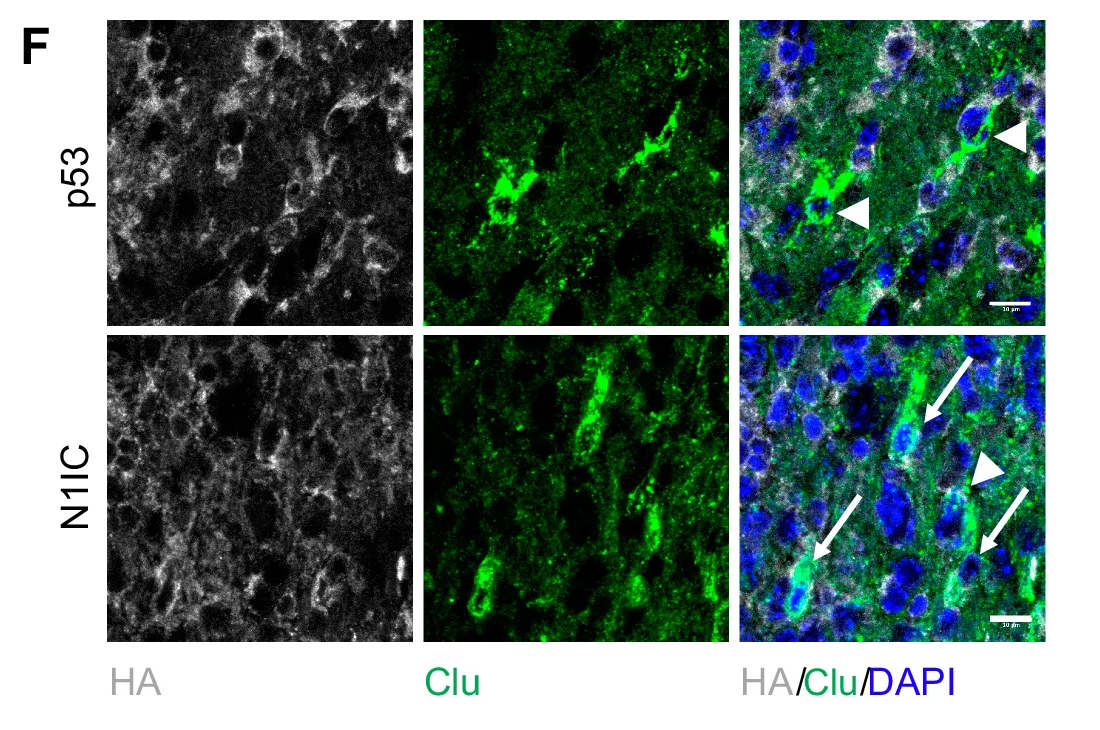
Published microscopy panel with HA, Clu and DAPI signals in two engineered mouse glioma models; original labels, arrows and scale bars retained.
Published science · engineered mouse models

The colours mark different cellular features. The combined views help researchers examine which signals occur together in these models.

Banu et al. (2024), Figure 1F. External published research, rather than results from this programme. Existing panel crop, shown without further alteration.

Original figure ↗© The Author(s), CC BY 4.0 ↗
Inside the glioblastoma research

Cell identity, treatment history and follow-up need to be considered together. Fewer cells immediately after an intervention and less regrowth later are different findings.

The proposed work asks which populations remain, what they contribute and what happens after treatment stops.

GPX4 helps protect cells against damaging lipid oxidation. Published preclinical work identified a related vulnerability in particular quiescent, astrocyte-like glioma populations.

One proposed comparison asks whether cells remaining after senescent-cell depletion retain a vulnerability linked to GPX4.

That external finding provides a research lead. NEUVIOR’s proposed comparison still needs its own experiments and interpretation.

Current stageScientific design and development planning.

Explore the glioblastoma programme

Also within NEUVIOR

ZYLON ↗

Research into bio-derived materials and resource-recovery processes for defined manufacturing uses.

Initial feasibility study completed.

PHARMORIS-ECO ↗

Investigating how fixed pharmaceutical chilling and freezing could use energy more effectively.

Feasibility.

Constellation ↗

A proposed place for shared scientific capability, growing businesses and public discovery.

Predevelopment concept.